A Walking Guide to Clifton
Discover Clifton on foot, from elegant Georgian streets and independent cafés to the Avon Gorge and the famous Clifton Suspension Bridge.
Clifton is one of the most distinctive parts of Bristol and one of the best areas of the city to explore at walking pace. Located to the west of the city centre, the neighbourhood combines elegant Georgian architecture, quiet residential streets, independent shops and cafés with dramatic views across the Avon Gorge.
Although Clifton Suspension Bridge is the area's most famous landmark, there is much more to discover before and beyond the bridge itself. Clifton Village has its own character, with small businesses, cafés and restaurants occupying attractive historic buildings. Further towards the gorge, the streets gradually give way to viewpoints, open spaces and some of the most impressive scenery in Bristol.
Clifton is particularly rewarding because many of its highlights are close enough to connect naturally on foot. A single walk can take you through Georgian streets, past independent businesses and towards the Avon Gorge before finishing at one of Bristol's most recognisable landmarks.
This guide follows the character of Clifton rather than treating the neighbourhood as a checklist of attractions. Along the way, we will look at its architecture, Clifton Village, local cafés and shops, the Avon Gorge and the route towards Clifton Suspension Bridge. There will also be practical advice to help you decide how much time to allow for the walk.
Whether you are visiting Bristol for the first time or returning to explore the city in greater depth, Clifton is an area worth taking slowly. Put aside some time to wander, look beyond the main sights and enjoy the combination of historic streets, local life and spectacular scenery that makes this part of Bristol so memorable.
Starting Your Walk in Clifton
Clifton is easy to reach from central Bristol, but once you arrive it quickly feels like a different part of the city. The streets become quieter, the buildings more spacious and the architecture increasingly dominated by elegant Georgian terraces. This change in atmosphere is one of the first things you notice when beginning a walk through the neighbourhood.
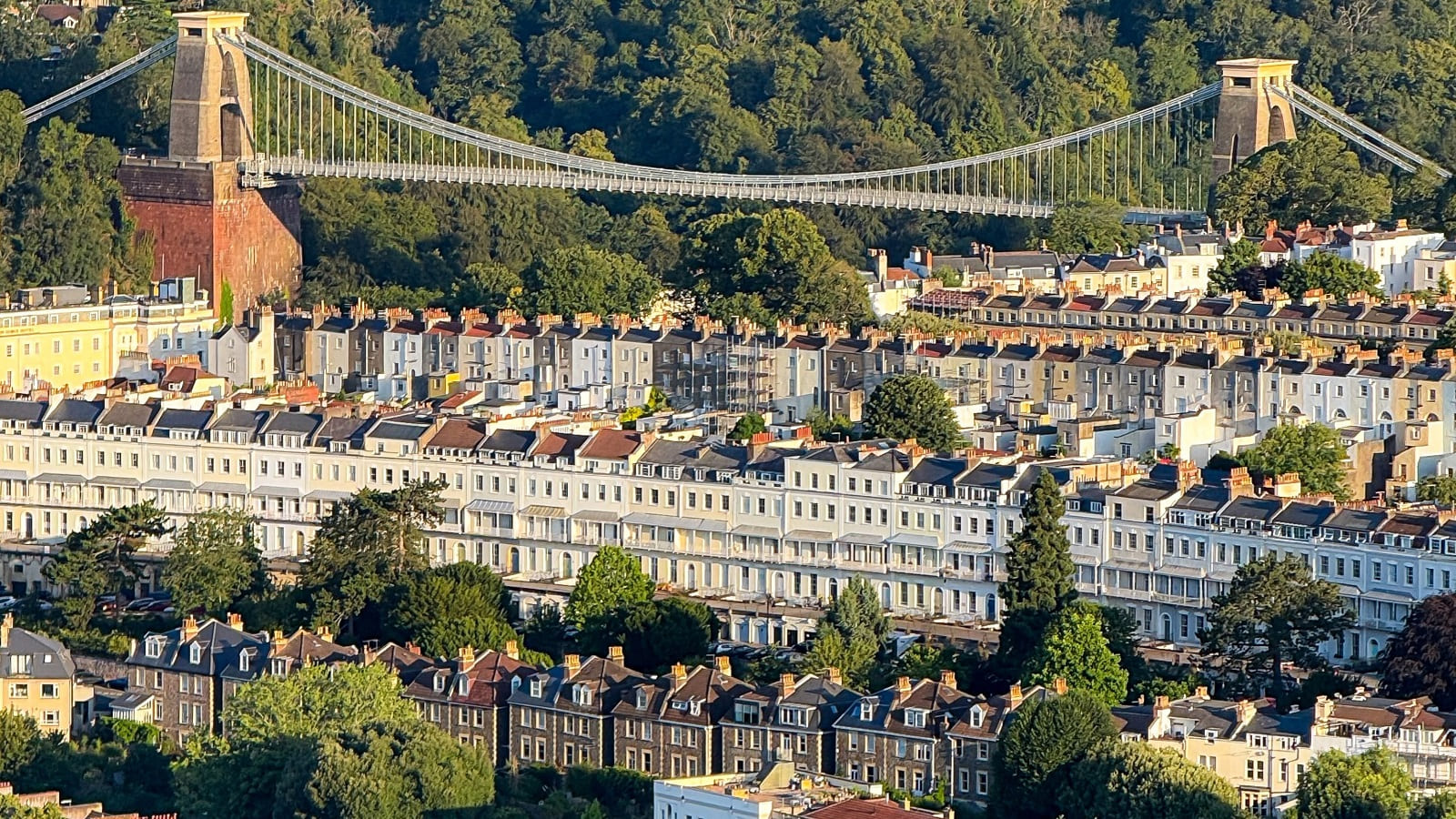
A good starting point is Clifton Village, where you can begin by exploring the streets around the local shops, cafés and restaurants. There is no need to rush directly towards the suspension bridge. Taking some time to walk around the village first gives you a much better sense of the neighbourhood and its character.
Clifton is particularly well suited to an unhurried walk. The area is full of small details that can easily be missed when following a strict sightseeing schedule: decorative stonework, traditional doorways, attractive windows and the changing shapes of the Georgian terraces. Even streets that are not listed in a guide can be worth exploring.
The route can also be adapted depending on how much time you have. If you are making a short visit, you can concentrate on Clifton Village and the main streets before continuing towards the suspension bridge. Visitors with more time can explore the neighbourhood more widely, stop for coffee or lunch and make their way gradually towards the Avon Gorge.
One of the advantages of beginning in Clifton Village is that the walk naturally combines sightseeing with everyday local life. Rather than moving from one major attraction to another, you can browse independent shops, look into cafés and watch the neighbourhood change as you move closer to the open landscape around the gorge.
From here, the route becomes increasingly focused on Clifton's architecture. The surrounding streets provide some of the clearest examples of the grand Georgian character that has made the area one of Bristol's most recognisable neighbourhoods.
Clifton's Georgian Architecture
One of the main pleasures of walking through Clifton is the architecture. The neighbourhood is known for its elegant Georgian streets and terraces, where long rows of carefully proportioned buildings create a strong sense of unity. Even if you are not travelling specifically to study architecture, it is difficult not to notice how different Clifton feels from many other parts of Bristol.
Many of the buildings use the warm-coloured stone that is characteristic of Bristol, creating a consistent appearance across streets and terraces. Repeated windows, doorways and architectural details give the buildings a carefully planned appearance, while small differences between individual properties reveal how the neighbourhood has developed over time.
Look closely at the façades as you walk. Decorative entrances, columns, railings, stonework and tall windows can turn an ordinary-looking street into an interesting architectural scene. The upper floors are also worth noticing, particularly where rows of windows create strong patterns along an entire terrace.
The scale of Clifton is another important part of its character. The neighbourhood contains substantial terraces and spacious streets, but these are mixed with smaller roads and quieter corners. This makes the area feel varied even when the dominant architectural style remains consistent.
Some of the best views of Clifton's architecture are found simply by walking rather than searching for one particular landmark. Allow yourself to take side streets and look back along the terraces. Changes in perspective can reveal details that are easy to miss when you are focused on reaching the next destination.
Clifton's Georgian character also helps explain why the neighbourhood feels so different from Bristol's historic harbour area. The waterfront reflects the city's maritime and industrial past, while Clifton is more strongly associated with elegant residential development and the expansion of Bristol during the Georgian period.
The architecture is not simply a backdrop for the more famous attractions. It is one of the main reasons to explore Clifton slowly. Even on a route towards the Avon Gorge and Clifton Suspension Bridge, the streets themselves provide plenty to see and photograph.
If you enjoy historic architecture, consider allowing extra time for this part of the walk. Clifton rewards visitors who stop occasionally, look upwards and pay attention to the smaller details rather than treating the neighbourhood as a route between two major landmarks.
Clifton Village
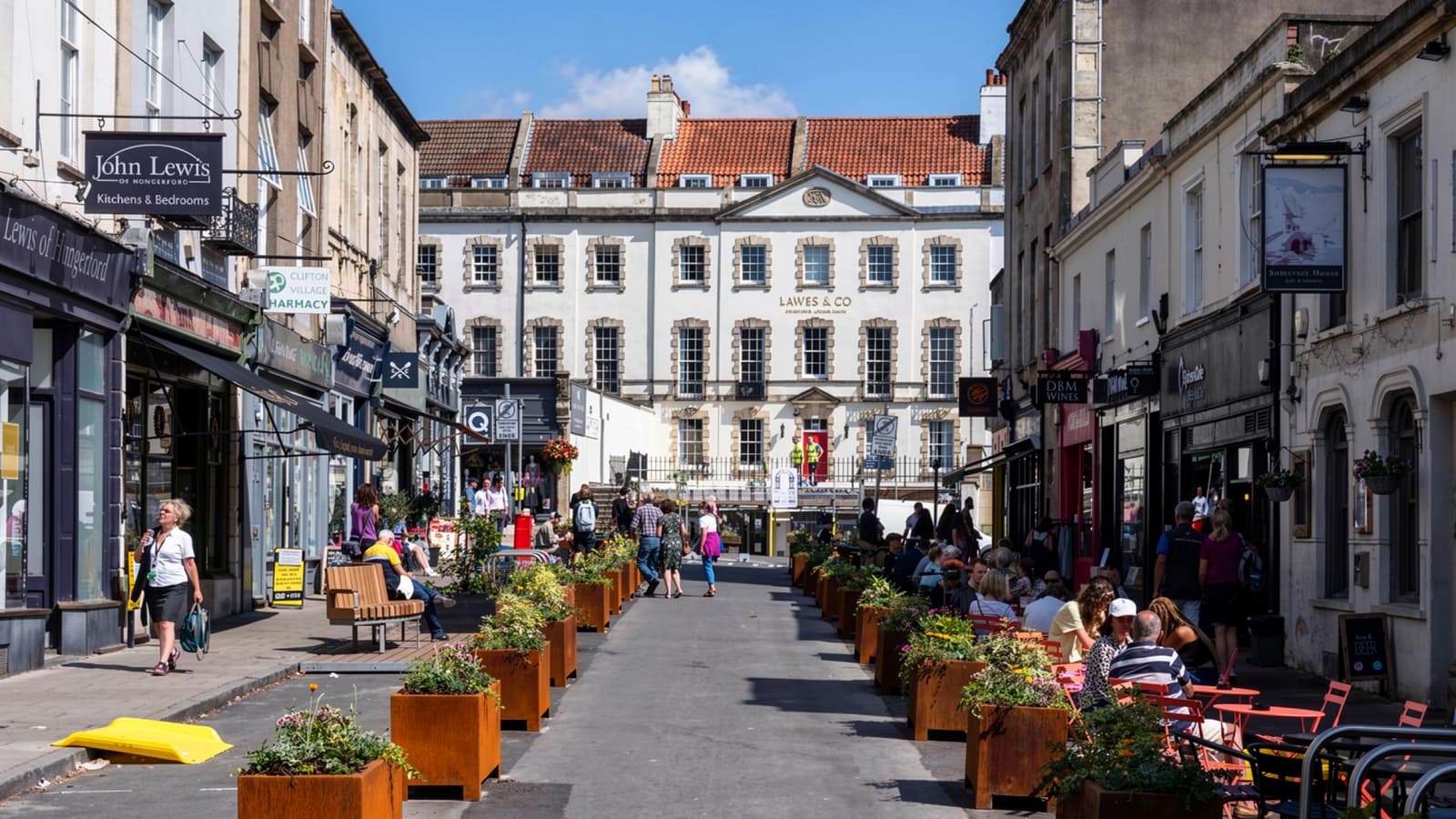
After exploring Clifton's Georgian streets, take some time to experience Clifton Village itself. This part of the neighbourhood has a more relaxed and local atmosphere, with independent cafés, restaurants, small shops and businesses occupying many of the historic buildings.
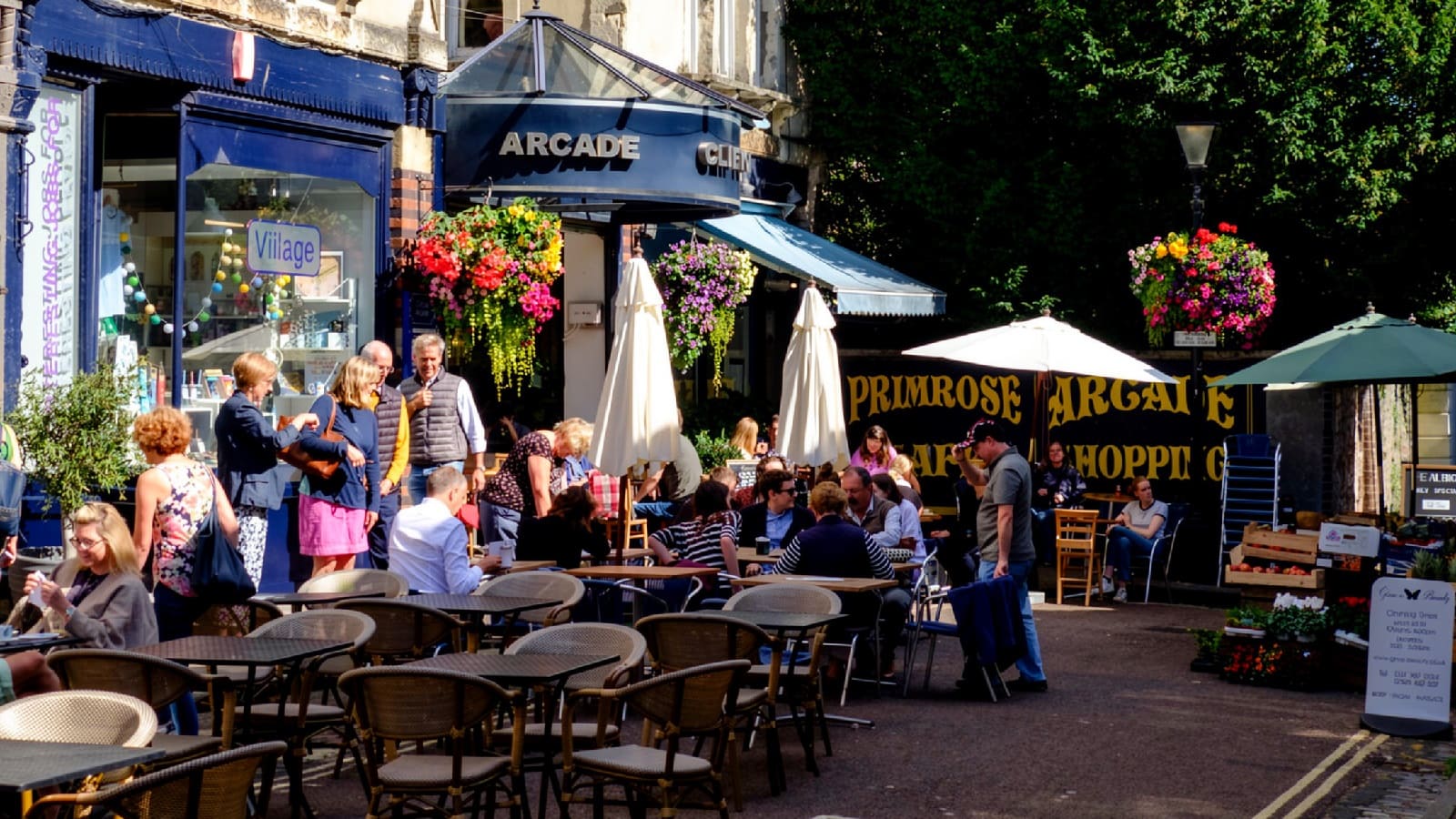
Clifton Village is a good place to slow down during your walk. Instead of simply passing through on the way to the suspension bridge, browse the local shops, look at the historic façades and take a break at one of the cafés. The neighbourhood is compact enough to explore comfortably on foot, so there is no need to follow a strict route.
The independent character of the area is part of its appeal. You will find businesses that give the neighbourhood a more personal atmosphere than a typical shopping district, from cafés and restaurants to small shops and specialist businesses. Even a short stop here can make the walk feel less like conventional sightseeing and more like experiencing a real part of Bristol.
Food is another reason to allow some extra time. Clifton Village offers opportunities for a coffee in the morning, a relaxed lunch or a meal later in the day. If you are following the walking route at an unhurried pace, stopping for something to eat can be a useful way to divide the walk before continuing towards the Avon Gorge.
The surrounding streets are also worth exploring beyond the busiest shopping areas. Small details in the buildings, traditional shopfronts and quieter residential roads help reveal the relationship between the commercial heart of the village and the wider historic neighbourhood.
Clifton Village works particularly well as part of a half-day walk. You can begin by exploring the architecture, spend some time around the village, stop for refreshments and then continue towards the gorge and the suspension bridge. This creates a natural progression from the built-up streets of Clifton to the open landscape beyond them.
If you are visiting Bristol with plenty of time, consider returning to Clifton Village later in the day. The atmosphere can change as cafés become busier and restaurants begin to fill, giving the neighbourhood a different feel from the quieter streets you may have encountered earlier.
Clifton Observatory and the Avon Gorge
As you continue west through Clifton, the character of the walk begins to change. The elegant streets and buildings gradually give way to open views, wooded slopes and the dramatic landscape of the Avon Gorge. This is one of the most rewarding parts of the route because it shows just how close Bristol's urban neighbourhoods are to the surrounding natural landscape.
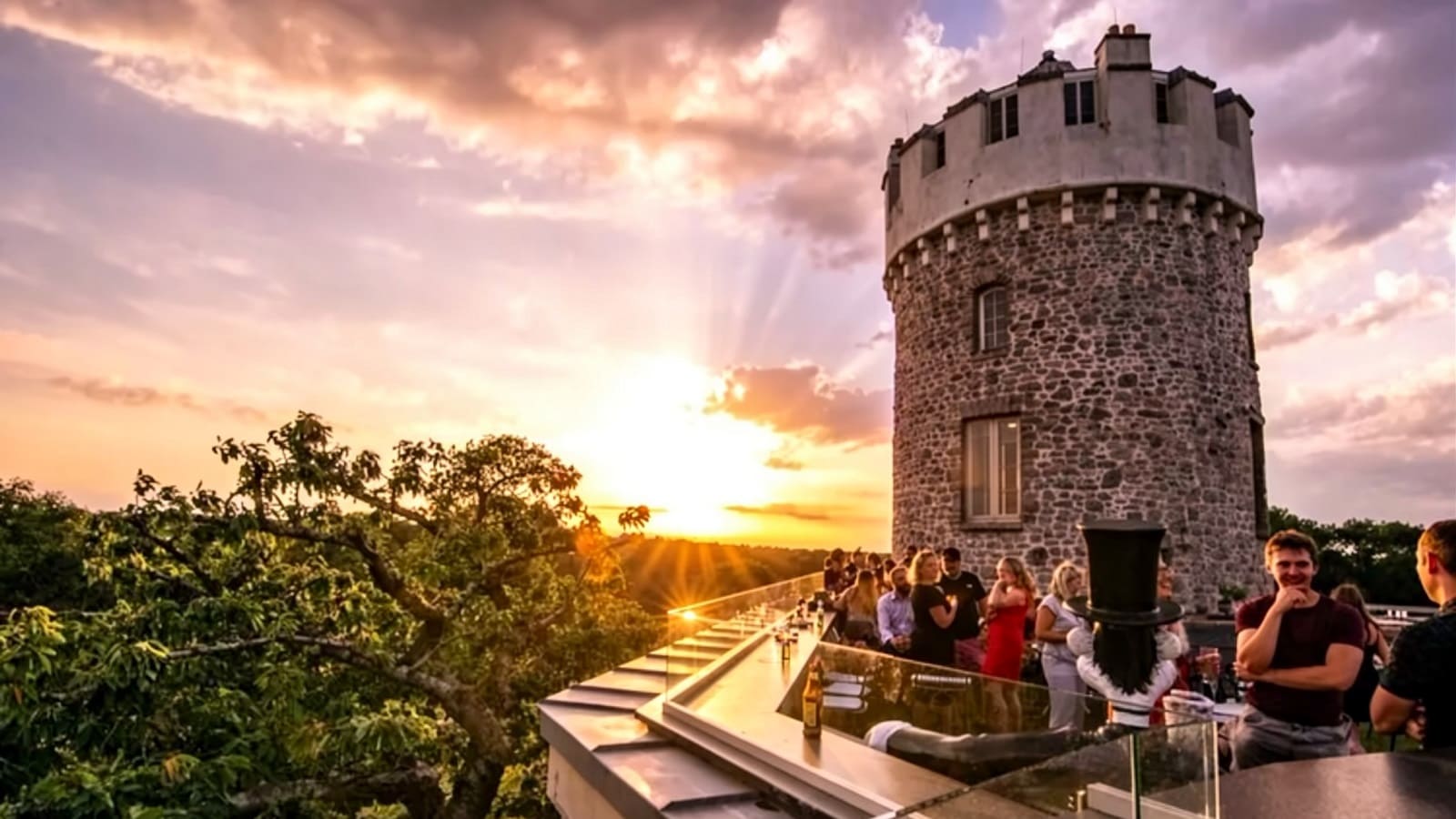
Clifton Observatory is one of the area's best-known landmarks. Standing above the gorge, it occupies a striking position and has long been associated with views across the Avon Gorge and towards the surrounding landscape.
The gorge itself is an important part of the Clifton experience. The steep sides create a dramatic contrast with the relatively orderly streets behind you, while the River Avon can be seen far below. From different viewpoints, the scale of the landscape becomes increasingly apparent.
This is a good point in the walk to slow down and spend some time looking around. The views change depending on where you stand, and the combination of the gorge, vegetation, river and surrounding buildings creates a very different atmosphere from the streets of Clifton Village.
The area is particularly attractive for photographers. The landscape provides opportunities to capture the contrast between natural scenery and the architecture of Bristol, while the changing light can make the gorge look quite different throughout the day.
The Avon Gorge is also an important part of the story of Clifton Suspension Bridge. The bridge was designed to span this dramatic gap, and seeing the gorge before reaching the bridge makes its engineering challenge much easier to appreciate.
Depending on your route and how much time you have, you can spend a little longer exploring the viewpoints around the gorge or continue towards the suspension bridge. Either way, this section of the walk is worth treating as an attraction in its own right rather than simply a passage between Clifton Village and the bridge.
The transition from Georgian Clifton to the open landscape of the Avon Gorge is one of the reasons this walking route works so well. Within a relatively short distance, you experience architecture, local life, historic landmarks and some of the most impressive scenery in Bristol.
Walking Towards Clifton Suspension Bridge
From the Avon Gorge, continue towards Clifton Suspension Bridge and allow yourself some time to enjoy the route rather than heading straight to the landmark. The approach is part of the experience, as the landscape gradually opens up and the scale of the gorge becomes easier to appreciate.
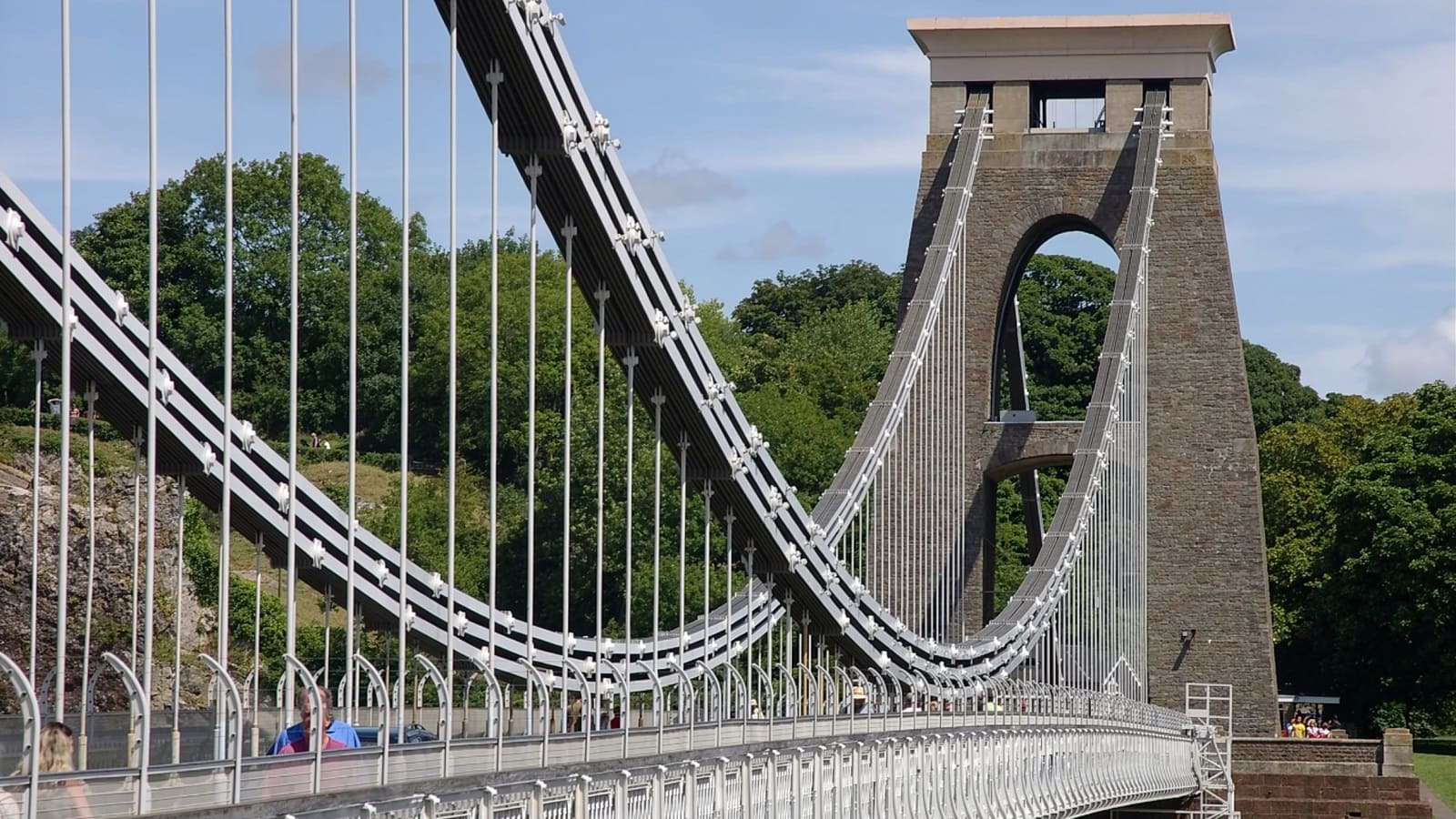
The first impression of the bridge can be surprisingly different depending on where you see it from. From some viewpoints, the structure appears framed by the sides of the gorge, while from others the towers and suspension cables dominate the landscape. Taking a little time to look for different angles can make the walk much more interesting.
As you approach, the relationship between the bridge and the landscape becomes particularly clear. The Avon Gorge is not simply a backdrop for the structure. Its depth and width explain why building a crossing here presented such a significant engineering challenge in the nineteenth century.
This is also a good section of the route for photography. The bridge, gorge and surrounding greenery create a strong combination of natural and man-made scenery. Depending on the weather and time of day, the atmosphere can change considerably, from bright open views to a more dramatic appearance when the gorge is covered by shadows or mist.
Try not to treat the bridge as simply the end point of the walk. Look back towards Clifton as you move closer and notice how the buildings gradually disappear behind the landscape. The changing perspective gives a better sense of how the neighbourhood is positioned above the gorge.
Once you reach the bridge, take time to appreciate it from both sides rather than immediately turning around. The crossing provides another perspective on the Avon Gorge and the surrounding countryside, while the structure itself offers plenty of architectural details to examine.
For many visitors, this is the natural highlight of a Clifton walk. The route has gradually moved from Georgian streets and independent shops through the village and towards the open gorge, finishing at one of Bristol's most recognisable landmarks.
Clifton Suspension Bridge
Clifton Suspension Bridge is the natural highlight of this walking route and one of the most recognisable landmarks in Bristol. Standing above the Avon Gorge, the bridge connects Clifton with Leigh Woods and provides a memorable combination of engineering, history and dramatic scenery.
The bridge was designed by Isambard Kingdom Brunel, whose name is closely connected with Bristol's industrial and engineering heritage. The project was ambitious for its time, and the eventual bridge became one of the defining structures of the city.
Crossing the bridge on foot gives you an opportunity to appreciate both the structure and its setting. Look along the suspension cables and towers, but also take time to look down into the Avon Gorge and across the surrounding landscape. The height and scale of the crossing are particularly impressive when experienced from the walkway itself.
The bridge is also worth viewing from the surrounding paths and viewpoints. Seeing it from different angles makes it easier to appreciate how the structure spans the gorge and how dramatically the landscape shaped its design.
The area around the bridge can become busy, particularly during good weather and at popular times of day. If you prefer a quieter experience, an earlier start can make the walk more relaxed. Even when there are other visitors around, however, the surrounding viewpoints provide plenty of opportunities to step away from the busiest parts.
Clifton Suspension Bridge can also be treated as either the destination or the turning point of your walk. After crossing, you can explore the area around Leigh Woods, or return towards Clifton and continue discovering the neighbourhood's streets, cafés and independent shops.
If you want to learn more about the landmark itself, our detailed Clifton Suspension Bridge guide looks more closely at its history, engineering, architecture and place in Bristol.
Exploring Clifton's Streets
One of the best ways to finish your Clifton walk is simply to spend some time wandering through the streets. The major landmarks may be the reason you came to the neighbourhood, but the smaller details between them are what give Clifton much of its character.
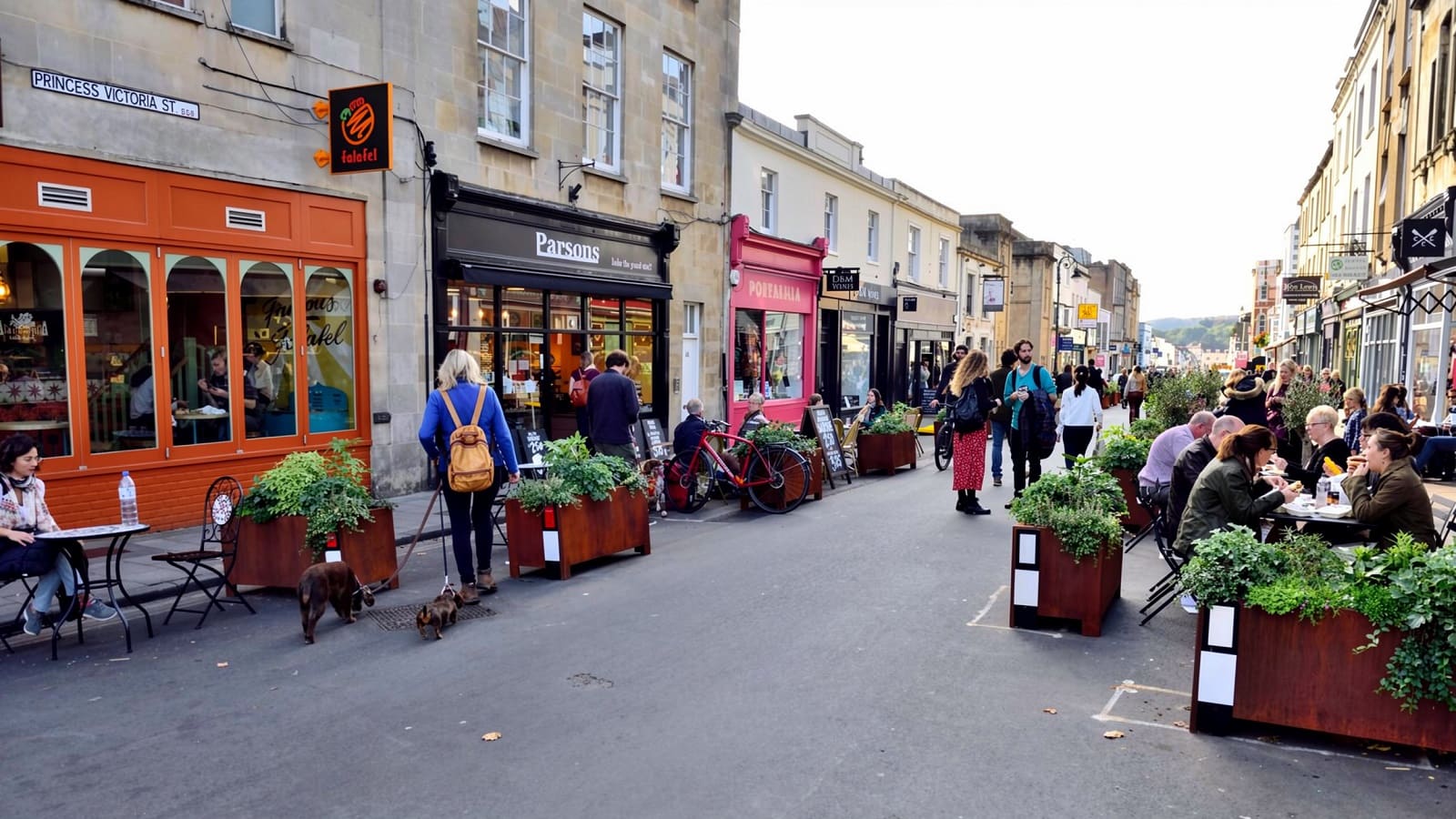
Move away from the busiest routes and you will find quieter residential streets where the architecture can be appreciated without the crowds. Long terraces, stone façades, traditional windows and carefully detailed entrances create a remarkably consistent visual character.
It is worth looking beyond the most obvious features of the buildings. Doorways, railings, steps, window surrounds and small pieces of stonework can reveal how much attention was given to the design of the neighbourhood. Some of these details are easy to miss when walking quickly towards a major attraction.
The streets also provide a useful reminder that Clifton is not simply a tourist district. Behind the cafés, shops and attractions are residential areas where people live and work, giving the neighbourhood an everyday atmosphere that continues alongside its historic architecture.
This is one reason a walking visit works better than simply travelling between individual landmarks. You can change direction when an interesting street catches your attention, stop to photograph a building or take a short break before continuing.
If you have already visited Clifton Suspension Bridge, there is no need to consider the walk finished. Returning through a different set of streets can reveal parts of the neighbourhood you missed on the way towards the gorge, and it gives you another opportunity to explore Clifton Village.
Allowing time for this slower exploration is particularly worthwhile for visitors interested in architecture and photography. Clifton's character is not concentrated in a single square or building; it is spread throughout the streets, terraces and small corners that make up the neighbourhood.
Cafés, Restaurants and Independent Shops
A walk through Clifton is not only about architecture and historic landmarks. The neighbourhood's independent cafés, restaurants and shops are an important part of its character, and they make Clifton a good place to slow down after several hours of sightseeing.
Clifton Village is particularly convenient for taking a break. You can stop for coffee in the morning, find somewhere for lunch or return later for dinner after exploring the Avon Gorge and Clifton Suspension Bridge. Having these options along the route means that you do not necessarily need to plan every stop in advance.
Independent businesses also give the area a different atmosphere from larger commercial parts of Bristol. Small shops and specialist businesses occupy many of the historic buildings, adding variety to the streets and giving visitors reasons to explore beyond the main attractions.
If you are following the walking route at a relaxed pace, consider building a longer break into your day rather than treating food and coffee as quick stops. Clifton is well suited to an unhurried visit, and sitting down for a while can make it easier to appreciate the contrast between the busy sightseeing areas and the quieter local streets.
The neighbourhood is also a useful place to finish the walk. After visiting the suspension bridge and returning towards Clifton Village, you can browse the shops or choose a restaurant for an evening meal. This gives the route a natural ending without requiring you to travel immediately back into central Bristol.
Businesses and opening hours can change, so it is sensible to check current information before planning your visit around a particular café, restaurant or shop. The wider area has enough choice, however, that a flexible approach is usually easy.
For many visitors, these everyday parts of Clifton become just as memorable as the major landmarks. The combination of historic buildings, local businesses and relaxed street life is what makes the neighbourhood feel like somewhere to experience rather than simply somewhere to pass through.
How Long Does the Clifton Walk Take?
The amount of time you need for a Clifton walk depends on how much of the neighbourhood you want to explore. The main landmarks can be connected relatively quickly, but allowing extra time makes the experience much more enjoyable because Clifton is best discovered at a relaxed pace.
A Short Clifton Walk
If you have limited time, you can concentrate on Clifton Village, walk through some of the Georgian streets and continue towards Clifton Suspension Bridge. This gives you a good introduction to the area without requiring a full day.
A shorter route works well for visitors who are combining Clifton with other Bristol attractions. You can see the main architectural features, enjoy the views around the Avon Gorge and visit the bridge before continuing elsewhere in the city.
A Half-Day in Clifton
A half-day is a much better option if you want to experience the neighbourhood rather than simply see its most famous landmark. You can explore Clifton Village, take your time with the Georgian architecture, visit the area around Clifton Observatory and walk towards the suspension bridge.
There is also enough time to stop for coffee or lunch and browse some of the independent businesses. This makes the route feel less like a checklist and more like a genuine walk through one of Bristol's most distinctive neighbourhoods.
A Longer Clifton Visit
With more time available, you can explore the streets beyond the main route, spend longer around the Avon Gorge and include additional viewpoints or walks in the surrounding area.
A longer visit is particularly worthwhile in good weather, when you can take advantage of the outdoor spaces and views without needing to hurry between attractions. You can also return to Clifton Village later in the day for food or drinks.
Allow Extra Time for the Walk
Remember that the walking time itself is only part of the experience. Clifton contains slopes, viewpoints and streets that are worth stopping to explore, so a route that looks short on a map can take considerably longer if you stop for photographs, architecture, cafés or local shops.
For most visitors, a half-day provides a good balance between seeing the major sights and having enough time to enjoy the atmosphere of Clifton. If you have a full day available, there is no reason to rush: the neighbourhood rewards slower exploration.
Tips for Walking Around Clifton
Clifton is straightforward to explore on foot, but a little planning can make the experience considerably more comfortable. The area combines historic streets, slopes, viewpoints and longer walks around the gorge, so it is worth preparing for a few changes in terrain rather than treating the route as a completely flat city stroll.
Wear Comfortable Shoes
Comfortable footwear is one of the simplest things you can do to enjoy the walk. You may cover more ground than expected while exploring side streets, Clifton Village, viewpoints and the area around the suspension bridge. Some sections also involve slopes and uneven surfaces.
Do Not Rush Through Clifton Village
If your main goal is to see Clifton Suspension Bridge, it can be tempting to head directly towards it. Try to resist that temptation. Clifton Village and the surrounding Georgian streets are a major part of what makes the neighbourhood worth visiting, so allow time to explore before continuing towards the gorge.
Allow Time for Views and Photographs
The Avon Gorge and the suspension bridge offer some of the most impressive scenery in Bristol. Different viewpoints reveal different perspectives, and the appearance of the landscape changes with the weather and light. If photography is important to you, leave some flexibility rather than planning the route minute by minute.
Check the Weather
Clifton is particularly enjoyable when the weather is good because much of the experience involves walking outdoors and appreciating the views. However, conditions around the gorge can feel quite different from sheltered streets in the neighbourhood. Check the forecast and dress accordingly, especially if you plan to spend several hours outside.
Leave Time for a Break
Clifton is well suited to a slower itinerary. A café or restaurant stop can divide the walk into manageable sections and gives you an opportunity to experience the neighbourhood rather than simply passing through it.
Explore Beyond the Main Route
Some of the most attractive parts of Clifton are not necessarily the places that appear first in a sightseeing itinerary. If you have time, take a few side streets, look at the architecture and explore areas away from the busiest visitor routes.
Finally, remember that Clifton is a living neighbourhood as well as a popular destination. Respect residential areas, keep noise to a reasonable level and take care around roads and viewpoints. A relaxed and considerate approach makes the walk more enjoyable for both visitors and local residents.
Why Walk Around Clifton?
Clifton is one of the best parts of Bristol to explore without a fixed timetable. Its appeal comes from the combination of things to see along the way: elegant Georgian architecture, independent cafés and shops, historic streets, the Avon Gorge and one of the city's most famous landmarks.
The neighbourhood also shows a side of Bristol that can easily be missed when a visit is focused only on major attractions. Clifton has a strong local character, and simply walking between its streets and small businesses can give you a better impression of how the city feels beyond its museums and historic sites.
The route becomes particularly memorable as you move towards the Avon Gorge. The transition from carefully planned Georgian streets to open views and dramatic natural scenery is striking, and the appearance of Clifton Suspension Bridge above the gorge provides a fitting highlight to the walk.
Another advantage is flexibility. You can make the walk relatively short if you are fitting Clifton into a busy day, or spend several hours exploring the neighbourhood, stopping for food and discovering quieter streets. There is no single correct way to experience the area.
Clifton also works particularly well alongside other Bristol attractions. You can combine a walk through the neighbourhood with Clifton Suspension Bridge, then continue towards other parts of the city or return to the Harbourside for museums, restaurants and waterfront walks.
For visitors interested in architecture, the Georgian terraces and historic details provide plenty to discover. For photographers, the Avon Gorge and suspension bridge offer memorable views. And for anyone simply looking for a pleasant afternoon in Bristol, the combination of cafés, shops, streets and open spaces makes Clifton an easy place to enjoy at your own pace.
Most importantly, Clifton rewards visitors who slow down. Rather than rushing from one landmark to another, take time to look around, explore a side street, stop for coffee and enjoy the changing views as you move towards the gorge. That relaxed approach is what makes a walk through Clifton such a memorable part of a visit to Bristol.
