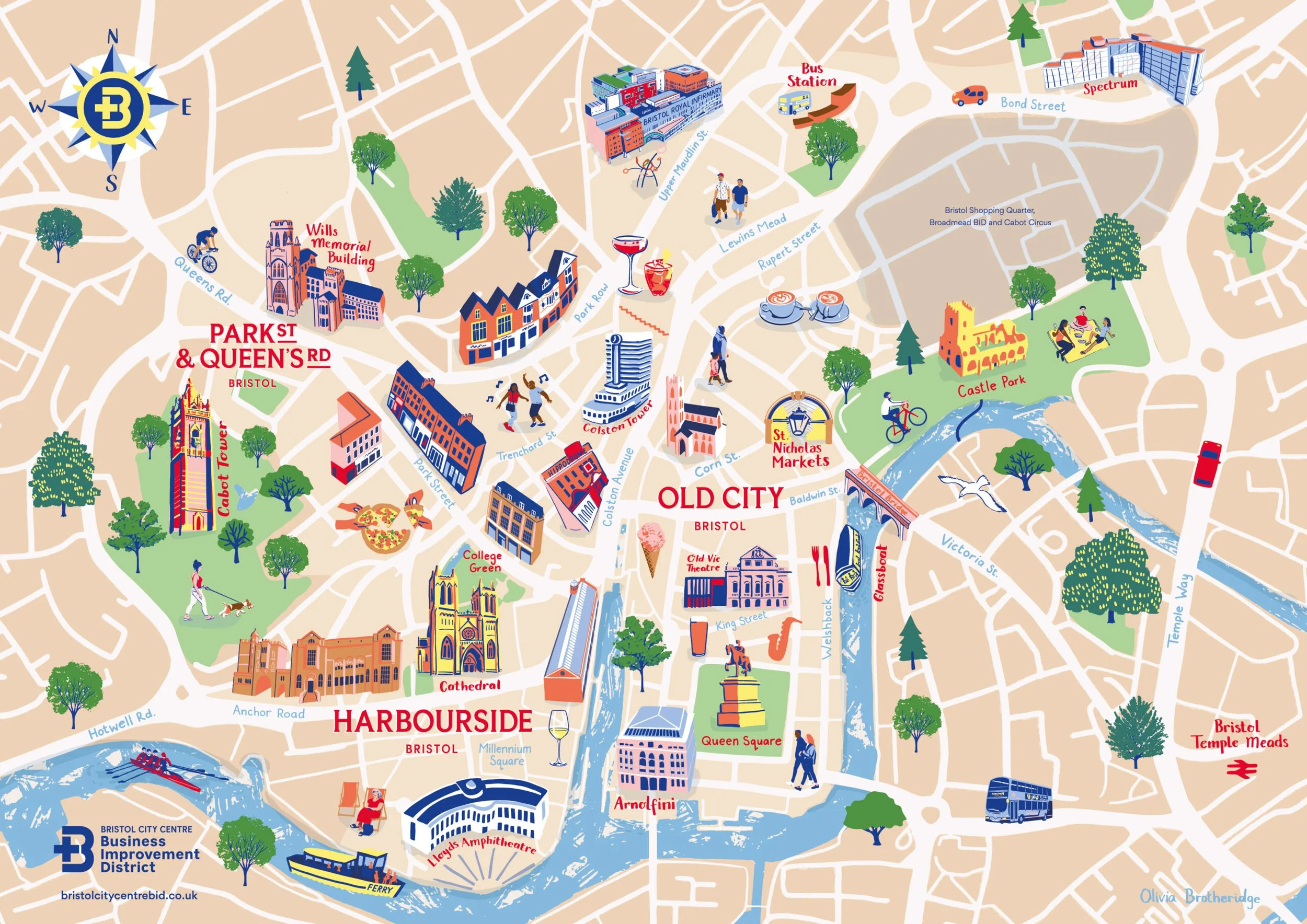
City Map
Bristol is one of England's most walkable and rewarding cities to explore. Although it is the eighth-largest city in the United Kingdom, many of its best-known attractions are concentrated within a relatively compact area. Historic streets, lively waterfronts, elegant Georgian neighbourhoods and modern shopping districts all sit within easy reach of one another, allowing visitors to experience very different sides of the city in a single day.
Understanding how Bristol is laid out before you begin sightseeing can make your visit far more enjoyable. The city grew around its historic harbour, which for centuries was one of Britain's busiest trading ports. As Bristol expanded, new districts developed around the medieval centre, each forming its own identity. Today every neighbourhood has a distinct atmosphere, architecture and collection of attractions, making it worthwhile to explore more than just the city centre.
Most visitors begin their journey in the City Centre before wandering through the historic streets of the Old City, continuing towards the regenerated Harbourside or climbing the gentle hills leading to Clifton. These four districts contain many of Bristol's best museums, historic buildings, cafés, viewpoints, galleries and public spaces. Together they provide an excellent introduction to everything the city has to offer.
Distances between the main districts are surprisingly short. Many popular attractions can be reached on foot, while frequent bus services and MetroBus routes connect areas that are slightly farther apart. Walking remains one of the best ways to discover Bristol, as many of the city's hidden courtyards, colourful streets and famous murals are only visible away from the main roads.
This guide introduces Bristol's principal districts and explains what makes each one unique. Whether you are interested in history, architecture, shopping, museums, waterfront walks or simply finding the best places to relax, understanding the character of each neighbourhood will help you plan a more enjoyable visit and discover parts of the city that many tourists overlook.
Bristol is made up of several distinctive neighbourhoods, each offering a different experience for visitors.
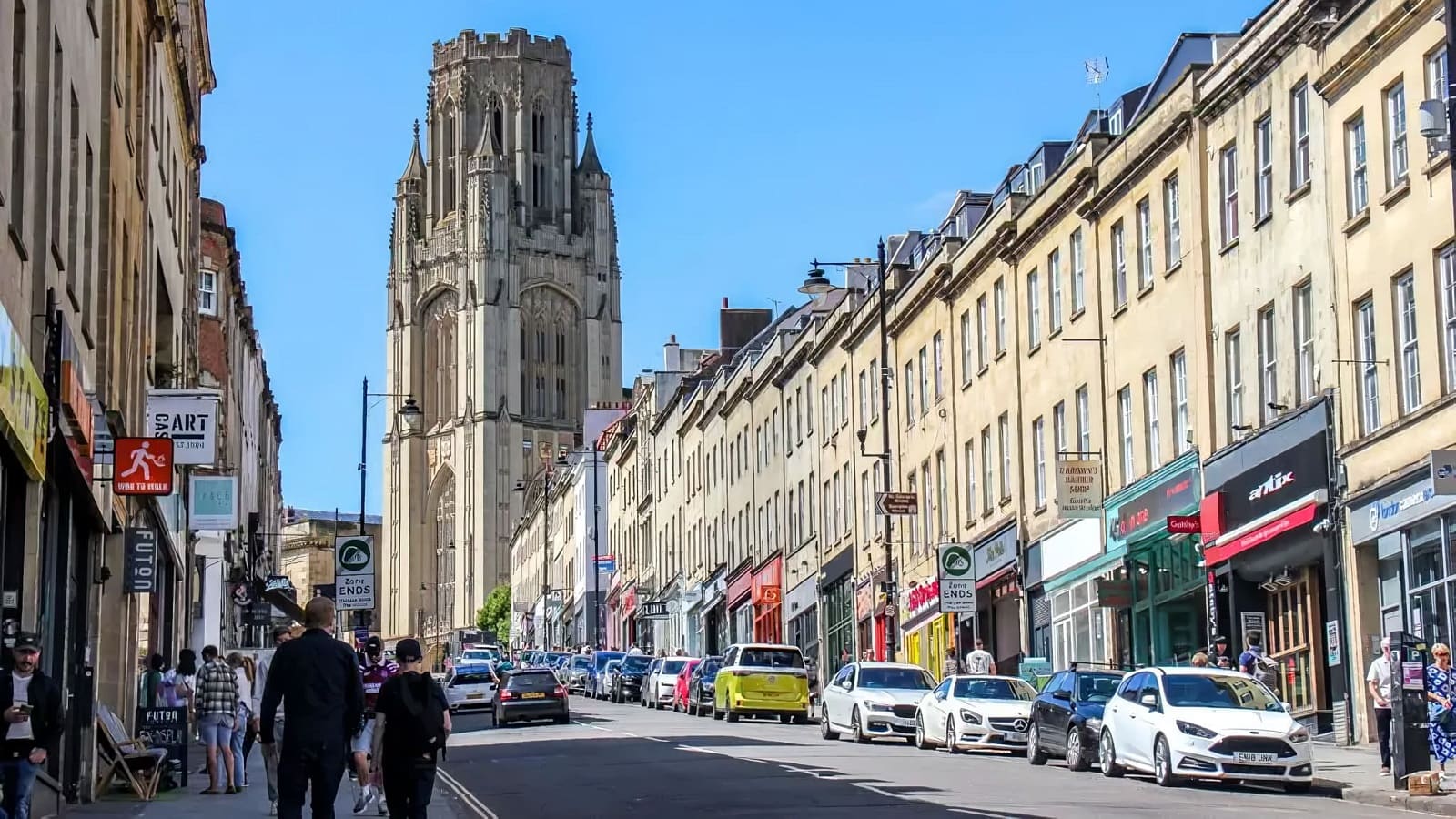
City Centre
Bristol City Centre is the natural starting point for most visitors and serves as the commercial, cultural and transport hub of the city. Whether you arrive by train at Temple Meads, by coach at Bristol Bus Station or by local bus from the surrounding areas, you will almost certainly pass through the centre before exploring the rest of Bristol. Modern shopping streets stand alongside centuries-old buildings, creating a lively district where history and contemporary city life exist side by side.
The centre is easy to explore on foot. Broadmead and Cabot Circus form Bristol's principal shopping area, offering everything from international brands to independent retailers. Nearby streets are filled with cafés, bakeries and restaurants serving cuisine from around the world, making this one of the busiest parts of the city throughout the day. Street performers, seasonal markets and public events regularly take place in the surrounding squares, adding to the lively atmosphere.
Despite its modern appearance in places, the City Centre has a long history. Much of today's layout reflects centuries of development around the River Frome and Bristol's medieval trading routes. Several historic buildings remain hidden between newer developments, rewarding visitors who take time to wander beyond the main shopping streets. It is not unusual to discover an old church, a Georgian square or a historic passage only a few minutes away from busy retail areas.
The centre also provides convenient access to many of Bristol's most popular attractions. Walking south leads towards the Harbourside, while a short stroll west brings visitors into the atmospheric streets of the Old City. From here, Clifton can be reached on foot in around thirty minutes or by frequent bus services. Because of these excellent connections, many travellers choose to stay in hotels within the city centre during their visit.
Visitors interested in shopping should allow several hours to explore Broadmead, The Galleries area and Cabot Circus. Those more interested in history can easily combine the centre with nearby St Nicholas Market and the historic streets surrounding Corn Street. Museums, galleries and cultural venues are all within walking distance, making it possible to build a full day's itinerary without needing to use public transport.
Bristol City Centre is also one of the best places to experience the city's diverse character. Office workers, university students, artists, shoppers and tourists all share the same streets, creating an energetic atmosphere that changes throughout the day. Morning commuters give way to lunchtime crowds, while evenings bring diners, theatre-goers and people enjoying the city's vibrant nightlife.
For first-time visitors, spending time in the City Centre provides an excellent introduction to Bristol before exploring its surrounding districts. It offers practical transport connections, plenty of places to eat and drink, easy access to major attractions and a fascinating blend of historic and modern architecture that reflects the city's long and varied history.
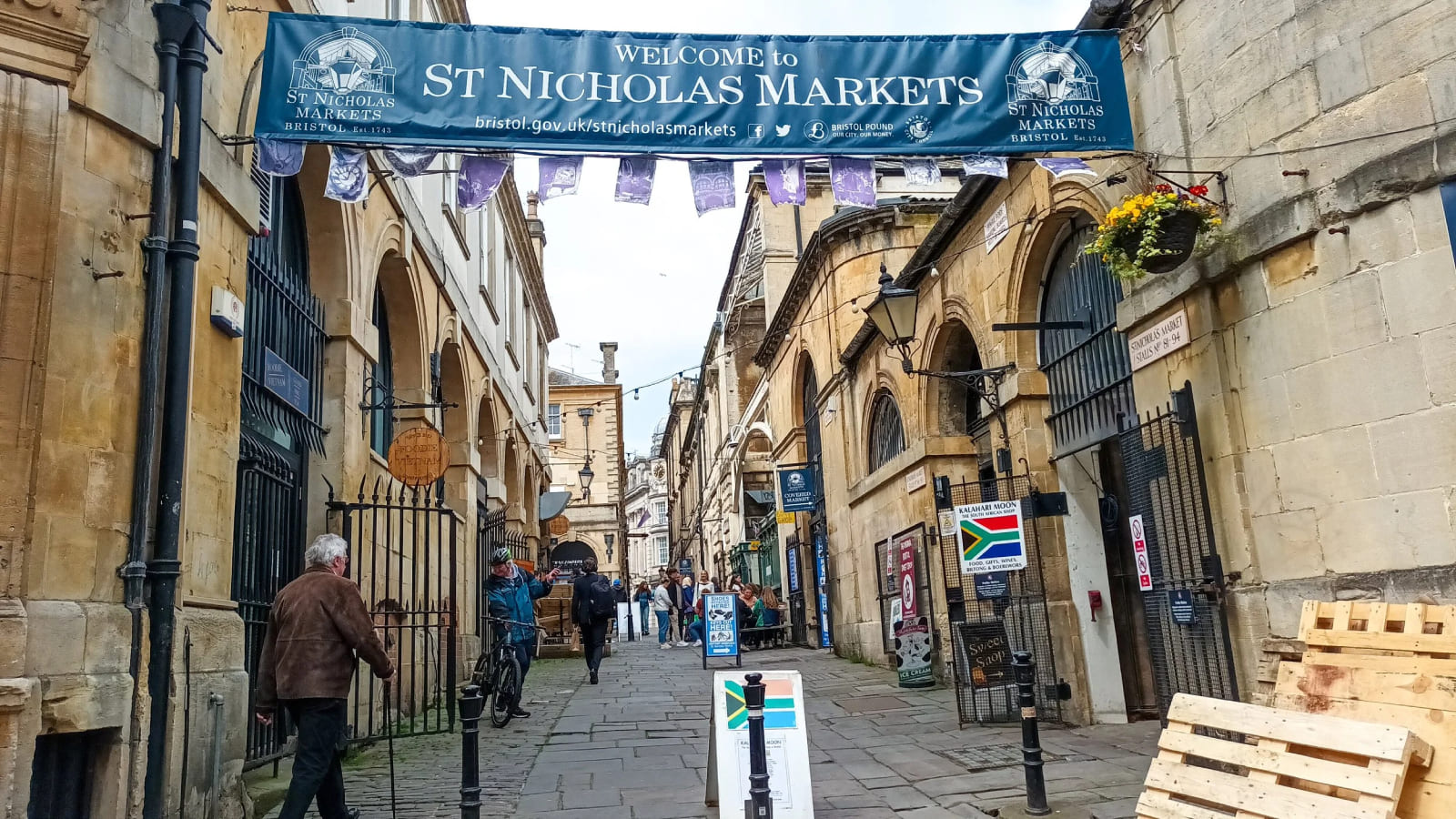
Old City
The Old City is where Bristol began. Long before the modern shopping districts and regenerated waterfront appeared, this was the commercial heart of one of England's most important medieval ports. Walking through its narrow streets today offers a fascinating journey into the city's past, where centuries-old buildings stand alongside lively cafés, independent shops and traditional pubs. Although much of Bristol has evolved over time, the Old City has retained its distinctive character and remains one of the most rewarding areas to explore on foot.
The district is centred around Corn Street, Wine Street, Broad Street and High Street, which together formed the historic core of medieval Bristol. These streets were once filled with merchants trading goods arriving from across Europe and beyond. Many historic buildings still survive, including elegant Georgian façades, former banking houses and churches that have watched over the city for hundreds of years. Looking closely, visitors will discover architectural details that reveal Bristol's importance as a major trading centre during the Middle Ages and the Georgian period.
One of the district's highlights is St Nicholas Market, widely regarded as one of the best historic markets in the United Kingdom. Established in the eighteenth century, the market is now home to independent traders offering local food, handmade crafts, vintage clothing, books and unique gifts. The surrounding covered arcades and historic alleyways create an atmosphere that feels very different from the city's modern shopping centres. Many visitors return simply to enjoy lunch from one of the market's popular street food vendors.
The Old City is also one of Bristol's best places to appreciate its architectural heritage. Medieval churches such as St Nicholas Church and St John on the Wall stand only a short walk apart, while beautifully restored merchant buildings line Corn Street. Historic details can be found almost everywhere, from carved stone doorways and ornate balconies to the famous bronze "Nails" outside the former Corn Exchange, where merchants once concluded business deals. These small features reward anyone willing to slow down and explore beyond the main streets.
Despite its historic appearance, the district is far from being an open-air museum. Independent coffee shops, traditional pubs, art galleries and small boutiques give the area a lively atmosphere throughout the week. During the evening, King Street becomes one of Bristol's most popular destinations for theatre-goers and visitors enjoying the city's vibrant food and drink scene. The combination of historic surroundings and contemporary culture is one of the reasons why the Old City remains so appealing to both residents and tourists.
The compact size of the district makes it ideal for walking. Most visitors spend two or three hours exploring its streets, although history enthusiasts can easily stay much longer. Because the Old City lies between the City Centre and Harbourside, it naturally forms part of many sightseeing routes and can easily be combined with visits to Bristol Cathedral, the waterfront or nearby museums.
For travellers interested in discovering Bristol's history, character and architectural heritage, the Old City is an essential destination. It captures the spirit of the city better than almost anywhere else, offering a unique blend of medieval streets, Georgian elegance and modern independent businesses that continue to keep this historic neighbourhood alive.
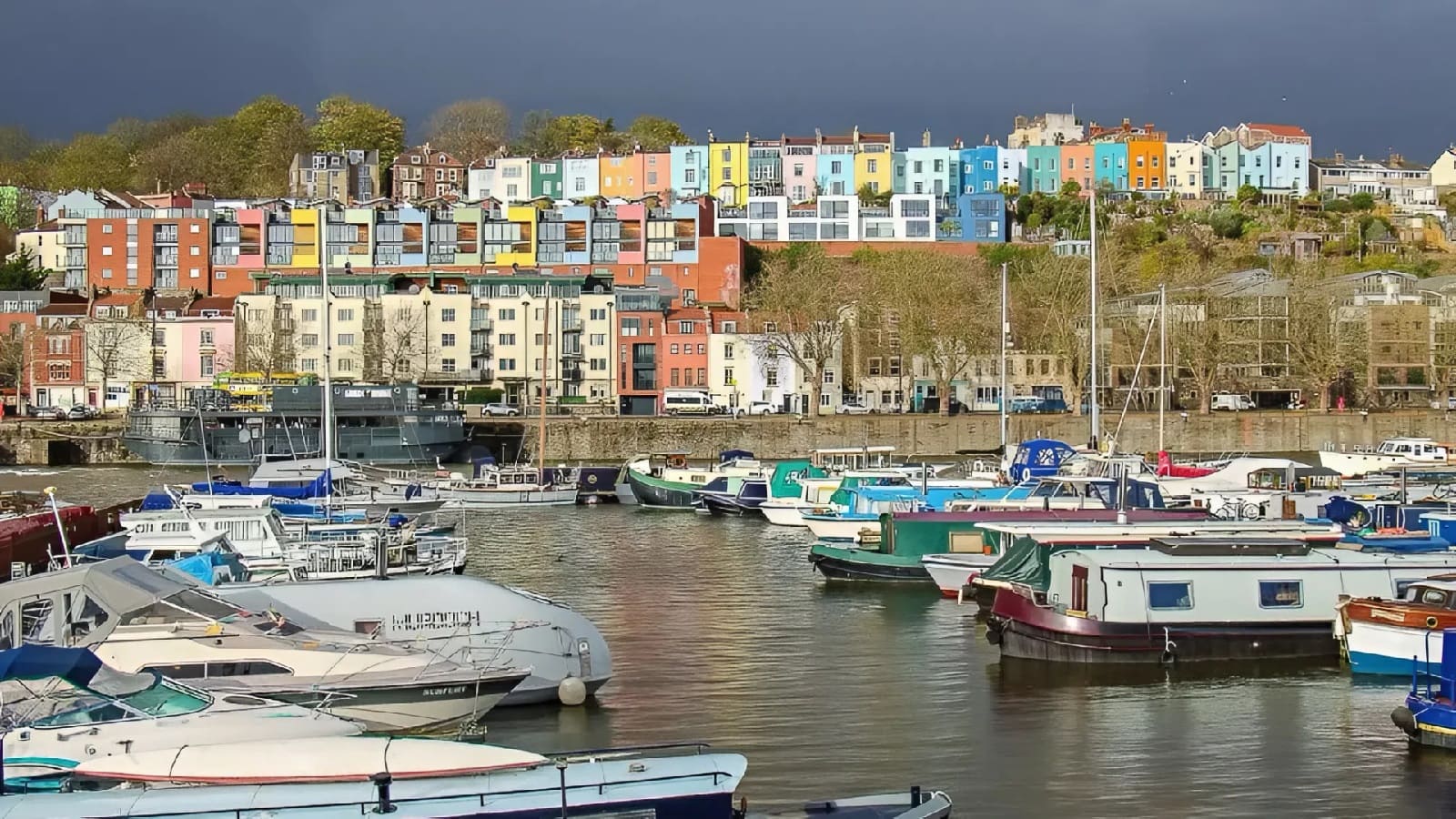
Harbourside
Bristol Harbourside is one of the city's most vibrant and picturesque districts, where centuries of maritime history meet modern cafés, museums, galleries and public spaces. Stretching around the historic Floating Harbour, the area has been transformed from a busy commercial dock into one of Bristol's favourite places for both visitors and local residents. Wide waterfront promenades, historic ships and impressive industrial buildings create an atmosphere unlike anywhere else in the city.
The harbour has played a central role in Bristol's development since the thirteenth century. For hundreds of years it served as one of Britain's busiest trading ports, welcoming ships carrying goods from across Europe, the Americas and beyond. In the early nineteenth century the construction of the Floating Harbour solved the problem of changing tidal levels in the River Avon, allowing ships to remain afloat regardless of the tide. This remarkable engineering achievement helped Bristol maintain its importance as a major port during the Industrial Revolution.
Although commercial shipping has largely moved elsewhere, many reminders of Bristol's maritime heritage remain. Historic warehouses have been carefully restored and converted into restaurants, offices, apartments and cultural venues, while traditional sailing vessels continue to moor alongside modern leisure boats. Walking around the harbour today offers a fascinating contrast between Victorian engineering and contemporary city life.
Several of Bristol's most important attractions are located within the Harbourside district. The world-famous SS Great Britain, designed by Isambard Kingdom Brunel, is permanently displayed in its historic dry dock and is widely considered one of the city's must-see attractions. Nearby visitors will also find M Shed, which tells the story of Bristol through engaging exhibitions, along with We The Curious, a popular interactive science centre suitable for visitors of all ages.
Harbourside is equally enjoyable for those who simply want to relax. Numerous cafés and restaurants overlook the water, making it an ideal place to stop for lunch or enjoy a drink while watching boats pass through the harbour. During the warmer months the waterfront becomes especially lively, with outdoor events, festivals, markets and street performers creating a welcoming atmosphere throughout the day and into the evening.
The district is exceptionally easy to explore on foot. Broad, level pathways follow the water's edge, making Harbourside one of Bristol's most accessible areas for families with children, wheelchair users and visitors who prefer a leisurely walk. Ferry services also operate across different parts of the harbour, providing both practical transport and an enjoyable way to experience the waterfront from the water itself.
For many travellers, Harbourside perfectly captures modern Bristol. It celebrates the city's maritime past while embracing its contemporary identity as a creative, cultural and welcoming destination. Whether you are interested in history, architecture, museums, photography or simply spending time beside the water, this district deserves a place on every visitor's itinerary.
Clifton
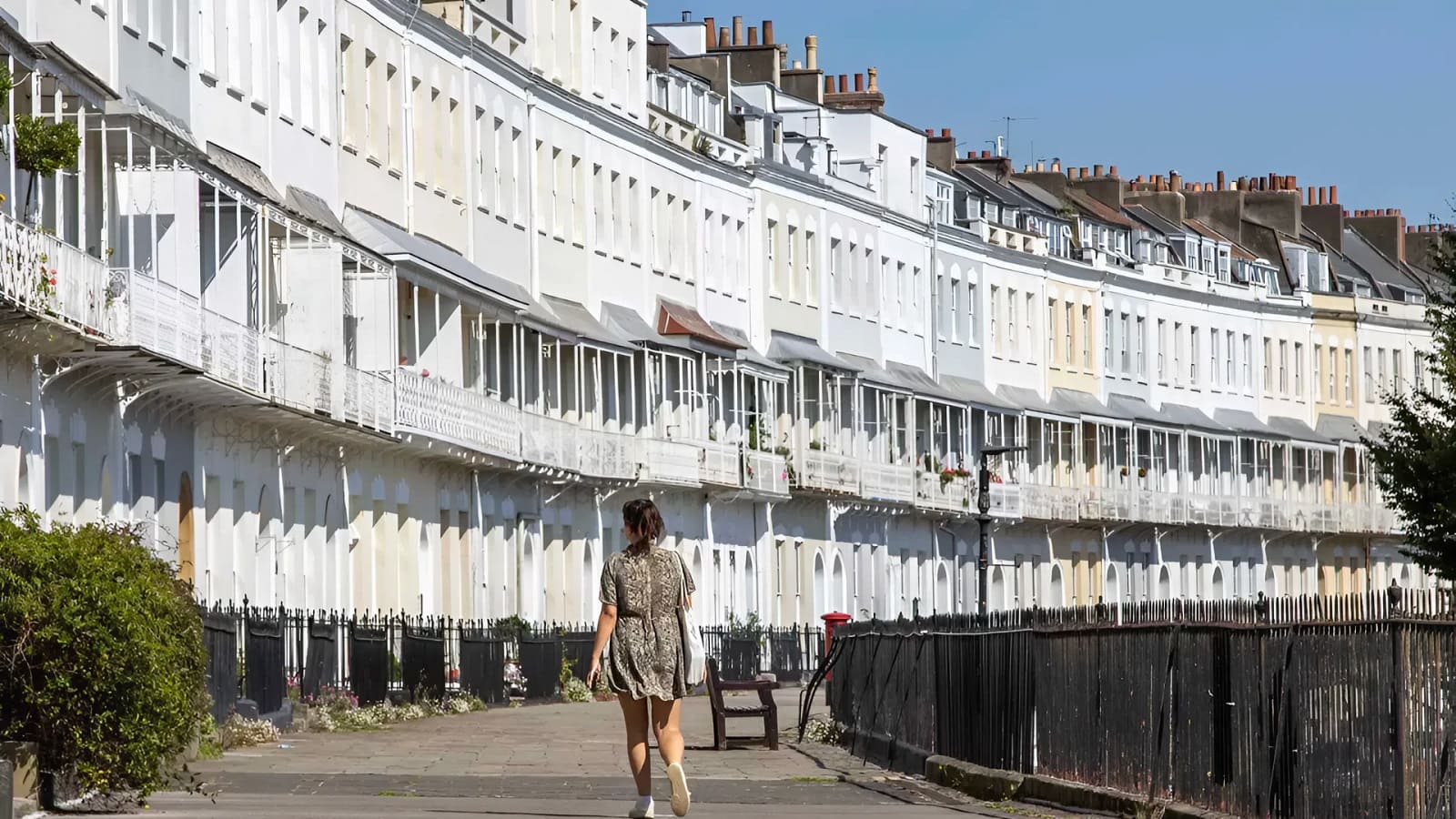
Clifton is widely regarded as Bristol's most elegant and prestigious neighbourhood. Situated on the western side of the city above the dramatic Avon Gorge, the district is famous for its beautiful Georgian architecture, leafy streets, independent boutiques and relaxed village atmosphere. Although Clifton lies only a short distance from the busy City Centre, it feels remarkably different, offering visitors a quieter and more refined side of Bristol that has remained popular for generations.
Development of Clifton accelerated during the eighteenth and nineteenth centuries, when wealthy merchants and professionals chose the area for their grand townhouses overlooking the Avon Gorge. Many of these impressive terraces survive today, giving the neighbourhood its distinctive appearance. Wide crescents, elegant squares and carefully preserved period buildings make Clifton one of the finest collections of Georgian architecture in the United Kingdom and a favourite destination for architecture enthusiasts.
At the heart of the district lies Clifton Village, a charming collection of independent shops, delicatessens, cafés, restaurants and small galleries. Unlike many modern shopping areas, the village has retained its historic character and is known for its welcoming atmosphere. Visitors often spend several hours browsing local boutiques, enjoying lunch in one of the many cafés or simply relaxing while watching everyday life unfold in this picturesque neighbourhood.
Clifton is, of course, best known as the home of the world-famous Clifton Suspension Bridge. Designed by the visionary engineer Isambard Kingdom Brunel and completed in 1864, the bridge stretches gracefully across the Avon Gorge and has become the symbol of Bristol itself. Walking across the bridge offers spectacular panoramic views of the gorge, the River Avon and the surrounding countryside. Nearby viewing platforms provide some of the city's finest photographic opportunities, especially during sunrise and sunset when the landscape is bathed in warm light.
Nature lovers will also appreciate Clifton Downs, a vast area of open green space extending along the edge of the gorge. The Downs are popular with walkers, runners, cyclists and families, offering peaceful paths, wide lawns and several viewpoints overlooking the dramatic cliffs below. It is difficult to imagine a better place to escape the bustle of the city while remaining only minutes from the centre.
Although Clifton is one of Bristol's most affluent neighbourhoods, it remains welcoming to visitors of all ages. The combination of historic streets, independent businesses, attractive parks and unforgettable views makes it one of the city's most enjoyable places to explore at a leisurely pace. Many visitors consider it the highlight of their trip and return several times during their stay to experience its changing atmosphere throughout the day.
Whether you come to admire Brunel's engineering masterpiece, discover elegant Georgian streets, enjoy excellent cafés or simply take in some of the finest views in South West England, Clifton offers an experience that perfectly captures Bristol's unique character. It is a neighbourhood where history, architecture, nature and everyday city life blend together to create one of Britain's most memorable urban landscapes.
Bristol City Map
This illustrated map highlights Bristol's main districts and many of the city's best-known landmarks, helping you plan your visit and understand how the attractions are connected.