SS Great Britain
Step aboard SS Great Britain, the revolutionary Victorian ship that transformed ocean travel and remains one of Bristol's most remarkable historic attractions.
Designed by the pioneering engineer Isambard Kingdom Brunel and launched in Bristol in 1843, SS Great Britain was unlike any passenger ship that had come before it. Its iron hull, screw propeller and impressive size represented a major step forward in the development of modern ocean travel.
Today, the beautifully preserved ship stands in the historic Great Western Dockyard, where visitors can explore its decks, cabins, engine spaces and exhibitions. A visit offers more than a glimpse into Victorian engineering — it provides an opportunity to experience what life at sea was like during an important period of British maritime history.
The Story of SS Great Britain
SS Great Britain was conceived during a period when steam power was beginning to transform long-distance travel. Isambard Kingdom Brunel wanted to create a ship capable of crossing the Atlantic faster, carrying more passengers and operating with greater efficiency than the vessels of its time.
Built at Bristol's Great Western Dockyard, the ship was launched in 1843. At the time, its combination of size, iron construction and steam-powered propulsion represented a remarkable achievement. SS Great Britain was one of the largest passenger ships ever built and helped demonstrate the potential of steamships for regular ocean travel.
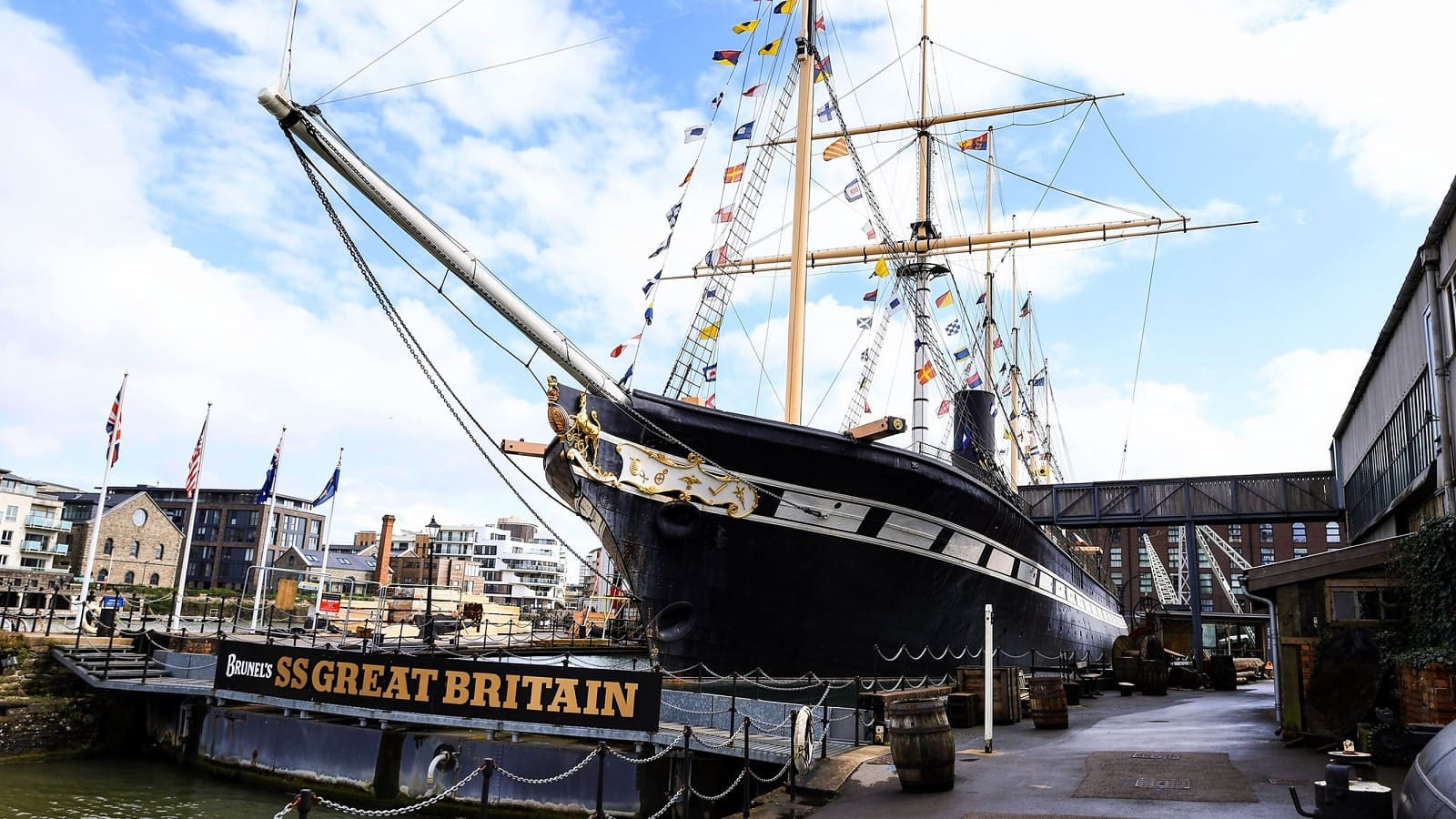
The ship's early career included regular Atlantic crossings between Liverpool and New York. It later served on routes to Australia and underwent several changes during its long working life. Over the decades, its role evolved from pioneering passenger liner to cargo vessel and eventually a storage ship.
After decades away from Bristol, SS Great Britain returned to the city in 1970. The ship was carefully restored and brought back to the historic dock where it had first been built, allowing a new generation to explore one of the most important ships in Britain's maritime history.
Brunel's Revolutionary Ship
When SS Great Britain was launched in 1843, it introduced a combination of technologies that made it very different from the ships that had come before it. Brunel's design brought together a strong iron hull, steam propulsion and a screw propeller in a vessel built for long-distance ocean travel.
The use of an iron hull was particularly significant. Iron allowed the ship to be built larger and stronger than many traditional wooden vessels, while its streamlined design helped it travel efficiently through the water. For a ship intended to cross the Atlantic, these advantages were especially important.
SS Great Britain was also one of the earliest large ocean-going ships to use a screw propeller. Instead of relying primarily on traditional paddle wheels, the propeller transferred power from the steam engine to the water beneath the ship. This arrangement became increasingly important in the development of modern steamships.
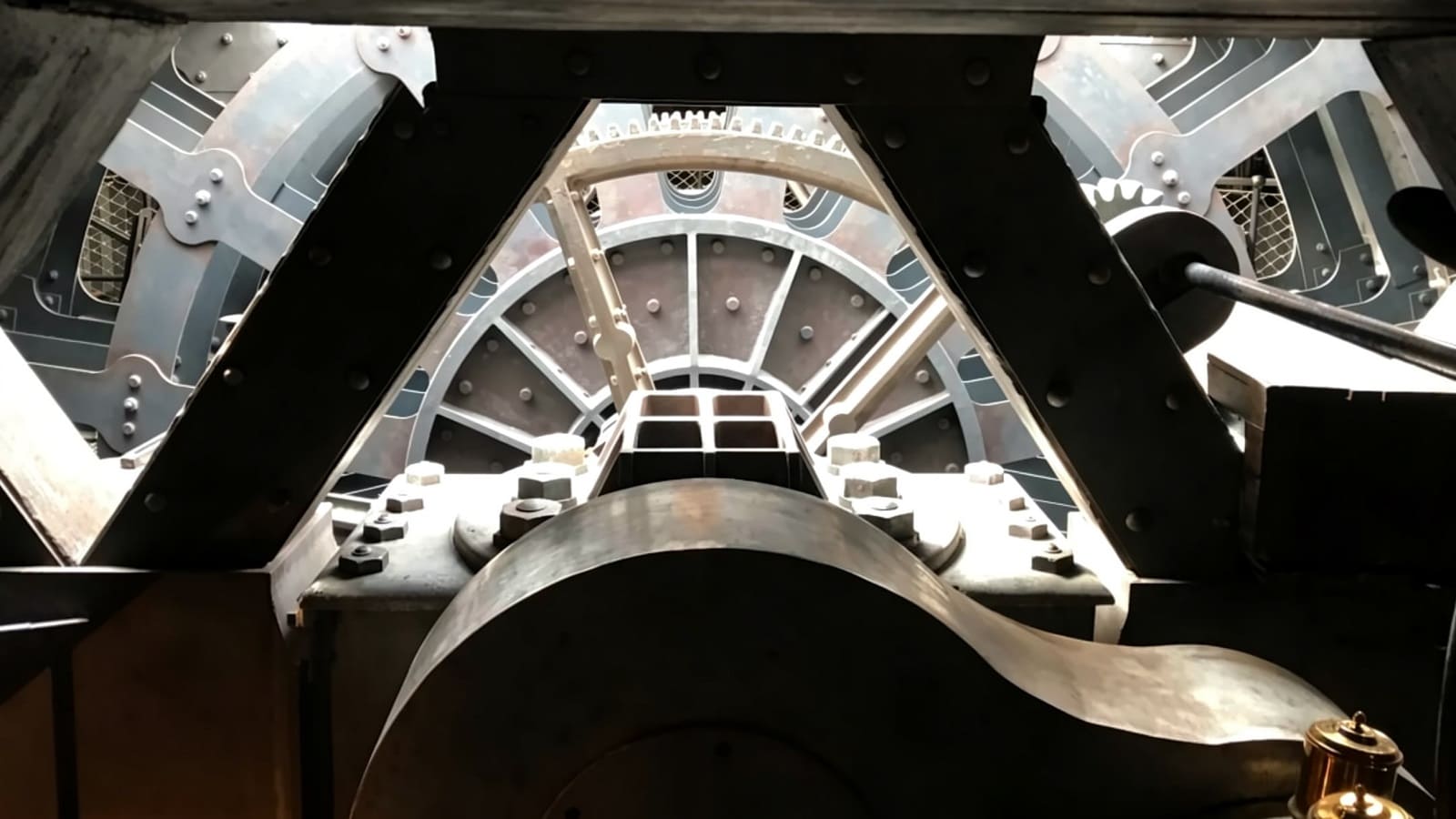
The result was a ship that combined impressive size with advanced engineering. SS Great Britain helped demonstrate that steam-powered ships could become practical vessels for regular international travel, contributing to a major change in the way people and goods crossed the world's oceans.
Brunel's work on SS Great Britain is one reason the ship remains so important to Bristol's engineering heritage. Alongside the Clifton Suspension Bridge, it represents the extraordinary ambition and technical innovation associated with Brunel's work in the city.
Life on Board
For the passengers who travelled aboard SS Great Britain, an Atlantic crossing was a very different experience from modern air travel. A journey between Britain and America could take days, and passengers spent much of that time living within the relatively confined world of the ship.
SS Great Britain was designed to accommodate passengers in different classes, with the quality and amount of space varying according to the fare paid. First-class passengers enjoyed more comfortable surroundings, while those travelling in lower classes had simpler accommodation and fewer private facilities.
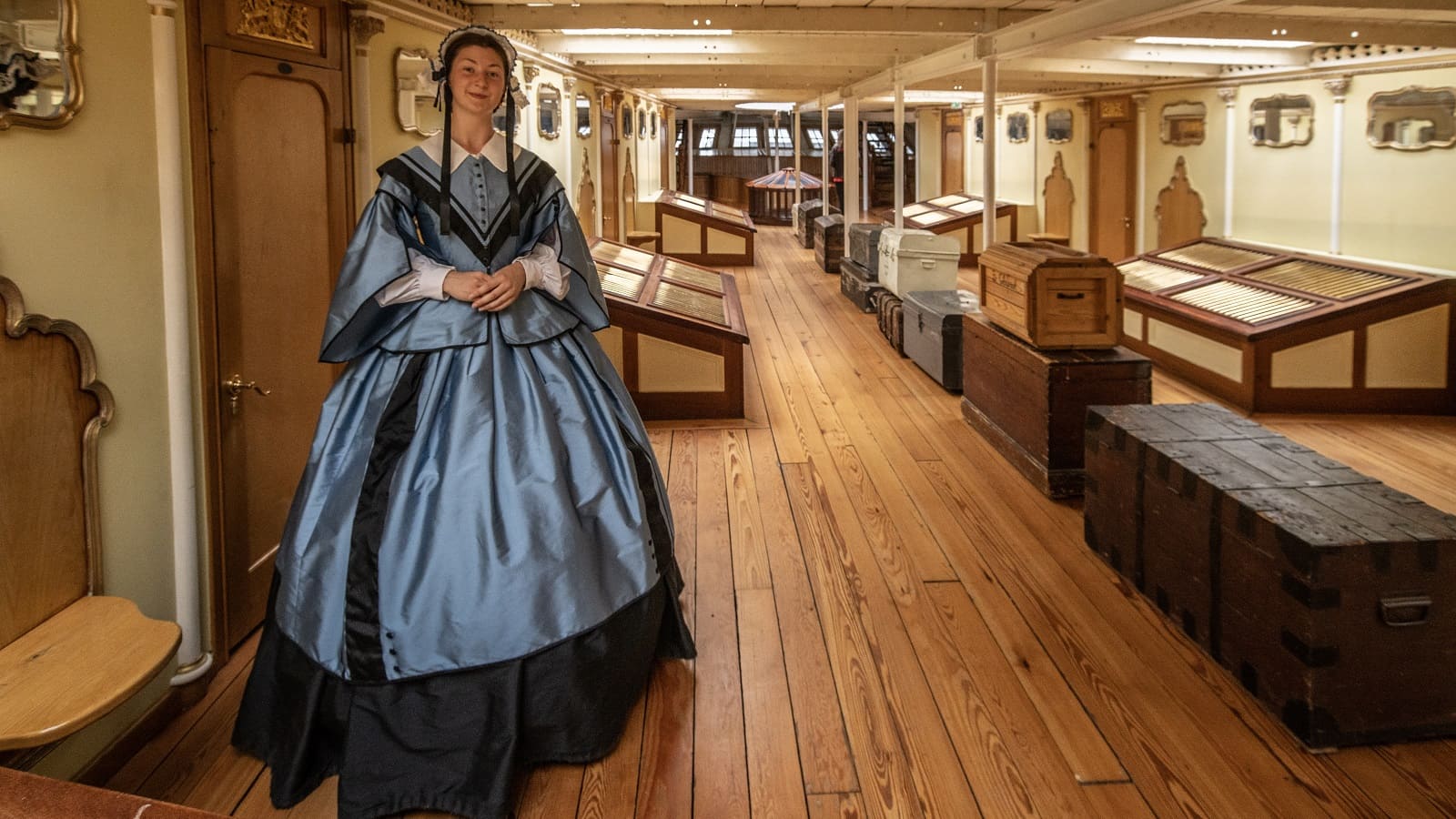
Life on board was not limited to sleeping in a cabin. Passengers ate meals, socialised and spent time on deck while the ship crossed the ocean. The journey itself was part of the experience, and the ship provided a self-contained environment in which passengers could spend several days away from land.
The crew had a very different routine. Running a large steamship required engineers, sailors, stewards, cooks and many other workers. The engine room was particularly demanding, with the ship's machinery requiring constant attention throughout a voyage.
Exploring the preserved interiors today gives visitors a useful sense of the contrast between the different parts of the ship. The cabins and working spaces help turn the history of SS Great Britain from an abstract story about engineering into something much more tangible.
From Ocean Liner to Museum Ship
SS Great Britain had a remarkably long and varied working life. After its pioneering early years as an Atlantic passenger liner, the ship was used on other routes and eventually became part of Britain's expanding maritime network to Australia.
As technology and passenger travel continued to develop, the role of the ship changed. SS Great Britain was eventually converted for other purposes, including carrying cargo, and later spent many years away from the routes for which Brunel had originally designed it.
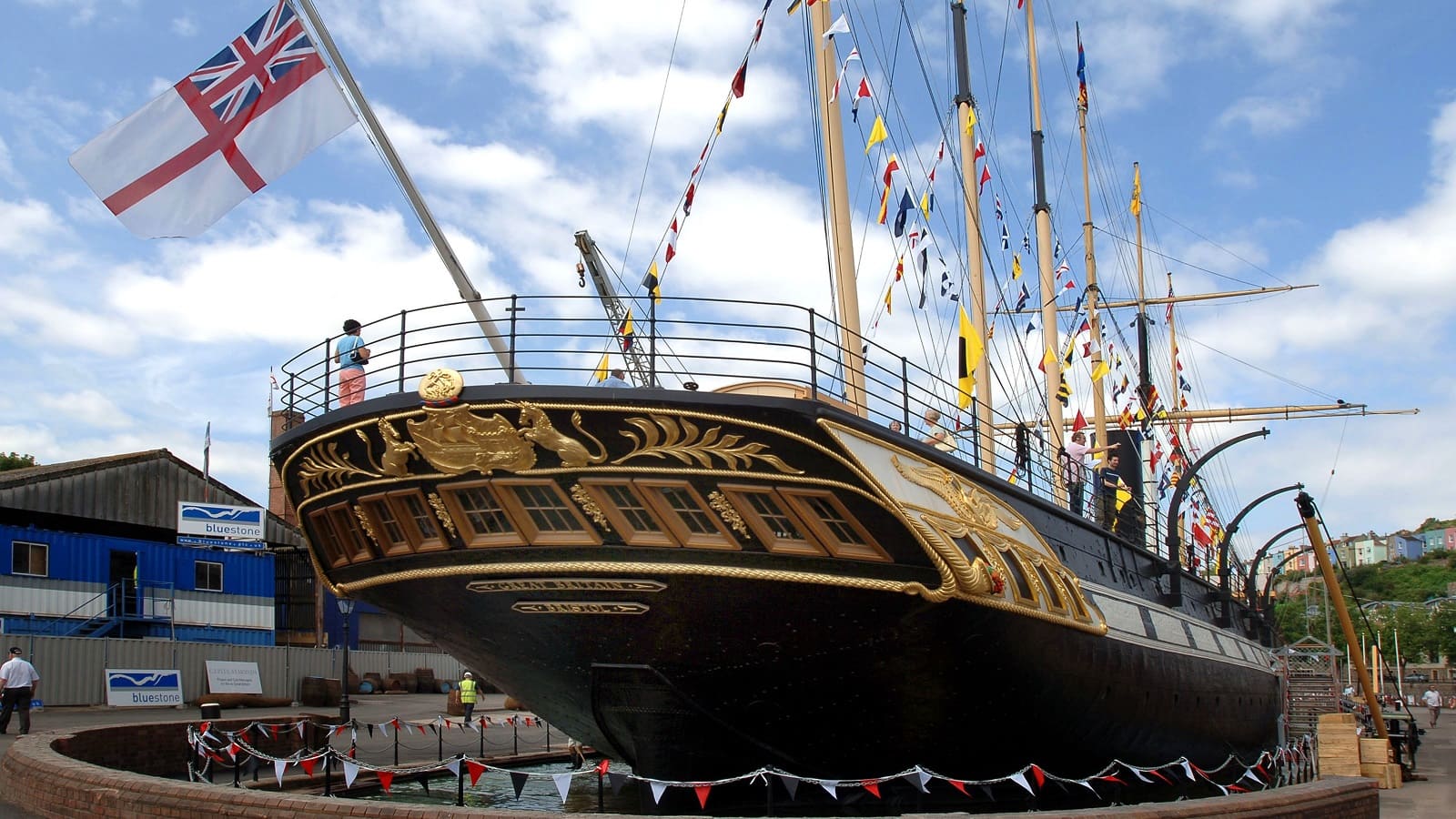
After its working career ended, the future of the historic vessel was uncertain. Years of exposure and changing use had left the iron hull in need of extensive protection and restoration. The decision was eventually made to return SS Great Britain to the city where it had been built.
In 1970, the ship was brought back to Bristol after an ambitious recovery operation. It was returned to the Great Western Dockyard, its original home, where a major conservation project began.
The restoration transformed SS Great Britain into the museum ship that visitors can explore today. Rather than preserving only a static exterior, the project has allowed many areas of the vessel to be interpreted and opened to the public, bringing together its engineering, passenger history and working life.
Its return to Bristol also restored an important connection between the ship and the city. The same dockyard where Brunel's revolutionary vessel was constructed is now the setting in which visitors can discover its remarkable story more than a century and a half later.
What You Can See Today
Today, SS Great Britain gives visitors the opportunity to explore much more than the outside of a historic ship. The experience takes you through different parts of the vessel, revealing how passengers and crew would have experienced a long-distance voyage during the Victorian era.
Visitors can walk across the decks and explore the preserved passenger areas, including cabins and communal spaces. Exhibitions throughout the ship explain how the vessel was designed, how it operated and what life was like during its working years.
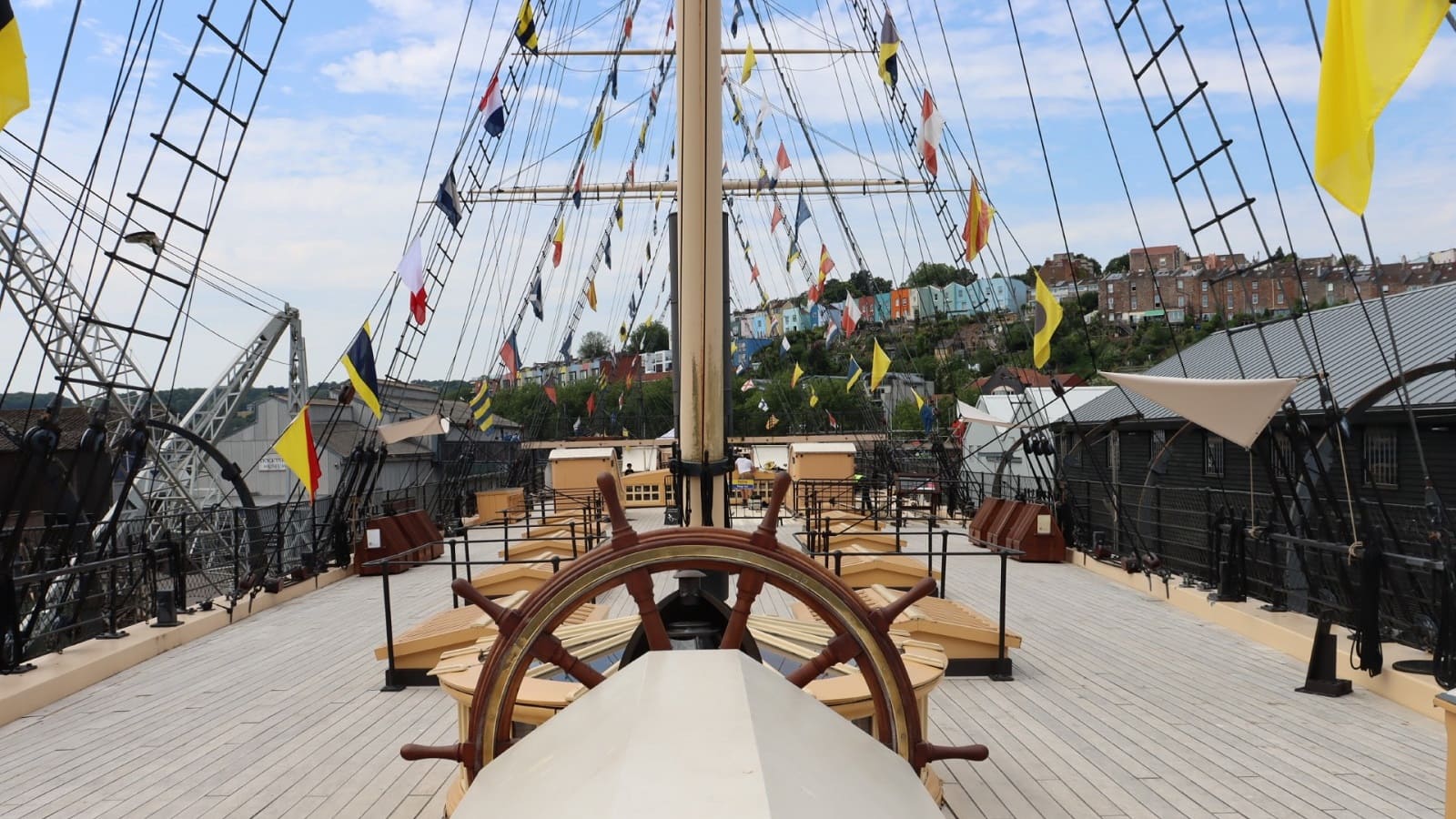
The engineering spaces provide another perspective on the ship. The enormous machinery and working areas show the scale of the technology required to move such a large vessel across the ocean using steam power. Together with the restored accommodation, these areas help explain how the ship functioned as a complete working environment.
The surrounding museum also places SS Great Britain in its historical context. Displays explore Brunel's ideas, the development of ocean travel, the people who travelled and worked aboard the ship, and the challenges involved in preserving an iron vessel of such age.
Because the experience combines original spaces, restored areas and detailed exhibitions, there is something to discover whether your main interest is engineering, maritime history, Victorian life or the story of Bristol itself.
The Dry Dock and Brunel's Original Design
One of the most remarkable parts of visiting SS Great Britain is seeing the ship in the same historic dock where it was built. The Great Western Dockyard was closely connected with Brunel's ambitious plans for the ship, and its survival gives visitors an unusually strong connection with the vessel's original history.
The dry dock also plays an important role in preserving SS Great Britain. An iron ship that has spent much of its life exposed to water requires careful protection, and conservation specialists have developed methods to protect the historic hull from further deterioration.
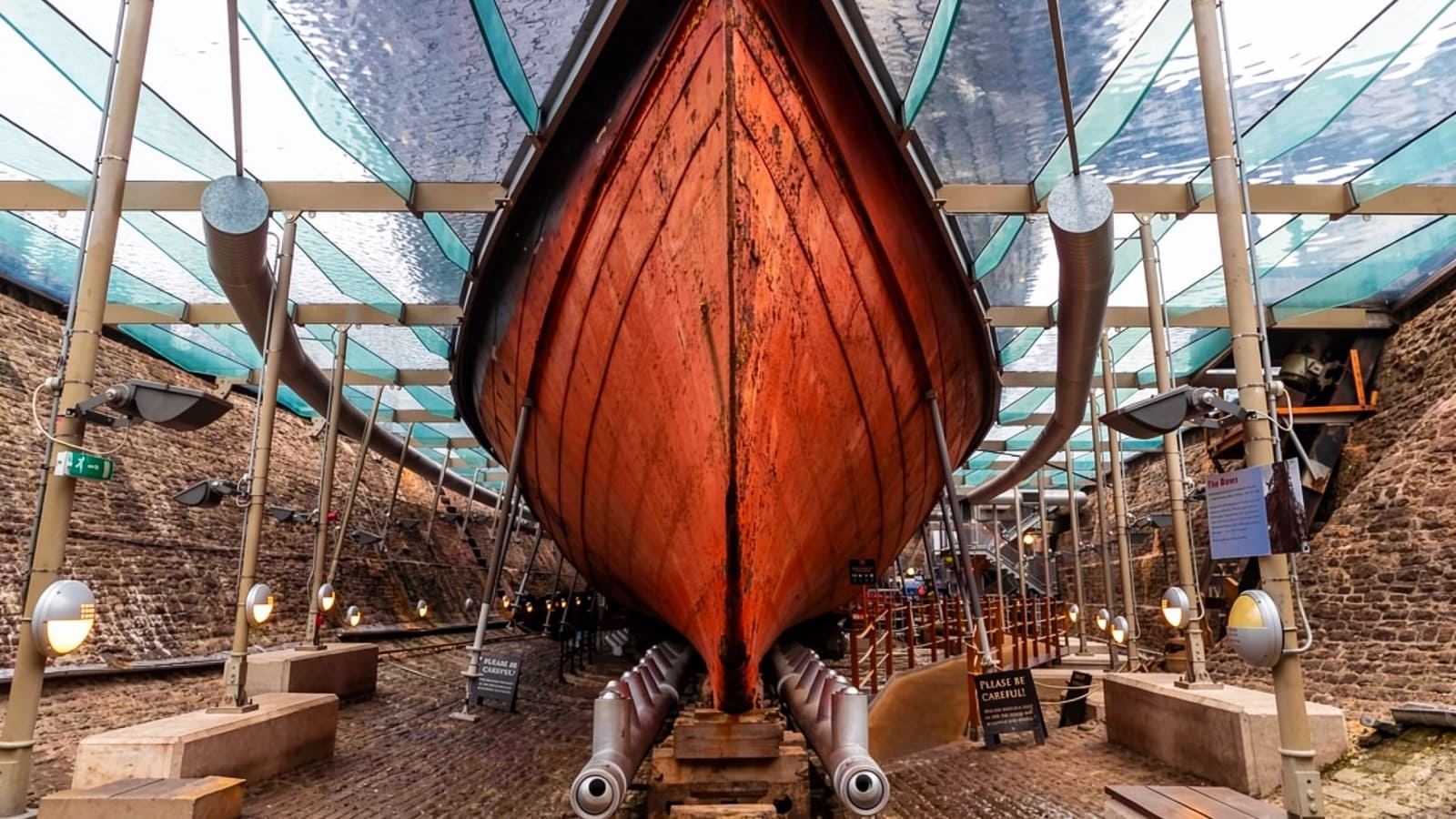
Seeing the ship from below also gives a better understanding of its construction. From this perspective, visitors can appreciate the scale of the iron hull and the engineering challenges involved in creating a vessel of such size in the 19th century.
The dry dock therefore forms an important part of the attraction rather than simply providing a setting for the ship. It connects Brunel's original shipbuilding project with the modern work required to preserve SS Great Britain for future generations.
Together, the ship and its historic surroundings make the Great Western Dockyard one of the most interesting places to explore Bristol's industrial and maritime heritage.
Visiting SS Great Britain
SS Great Britain is located in Bristol's historic Harbourside, making it easy to combine a visit with other attractions in the city centre. The ship stands at the Great Western Dockyard, close to the waterfront and within walking distance of several museums, galleries, cafés and other visitor attractions.
Allow at least two to three hours for a visit if you want to explore the ship, the dry dock and the surrounding exhibitions without rushing. Those with a particular interest in maritime history, engineering or Brunel may want to spend longer discovering the different areas of the attraction.
SS Great Britain is also a good choice for visitors travelling with children. The ship's decks, cabins and machinery provide plenty of opportunities to explore, while the exhibitions help explain the history in a way that goes beyond simply looking at historic objects.
The attraction can be easily combined with a walk around Bristol Harbourside. Depending on your itinerary, you can also visit nearby museums and attractions on the same day, making the area a convenient base for exploring Bristol's maritime heritage.
Opening hours, admission prices and visitor arrangements can change, so it is worth checking the latest information before your visit. This is particularly useful when planning a trip during busy periods or around special events.
SS Great Britain and Bristol's Maritime Heritage
SS Great Britain is closely connected with the history of Bristol itself. The city developed as an important port and centre of trade, and its position on the River Avon helped make it a natural location for shipbuilding and maritime commerce.
The Great Western Dockyard became an important part of this story during the 19th century. It was here that Brunel's ambitious ship was built, combining Bristol's industrial capabilities with new ideas about engineering and long-distance travel.
The arrival of SS Great Britain represented more than the construction of a single remarkable vessel. It reflected a period when steam power, iron construction and improved transport links were changing the way Britain traded and connected with the rest of the world.
Today, the ship forms an important part of Bristol's Harbourside heritage. Together with the surrounding historic docks, museums and waterfront buildings, it helps visitors understand how strongly the city's identity has been shaped by the River Avon and its connection with the sea.
Visiting SS Great Britain therefore offers more than an opportunity to see an extraordinary Victorian ship. It is also a way to understand Bristol's development as a centre of engineering, industry, trade and maritime innovation.
Why Visit SS Great Britain?
SS Great Britain is one of Bristol's most fascinating attractions because it brings together engineering, maritime history and the story of everyday life at sea. Instead of simply looking at a historic object behind glass, visitors can walk through the ship and experience many of its original spaces at close range.
The attraction is particularly rewarding for anyone interested in Isambard Kingdom Brunel and the remarkable engineering achievements of the Victorian era. The ship's iron hull, steam technology and pioneering screw propeller demonstrate just how ambitious Brunel's approach to engineering was.
There is also plenty to discover for visitors who are more interested in history and people. The preserved cabins, decks and working areas reveal how passengers and crew experienced long ocean voyages at a time when international travel was becoming faster and more accessible.
Its location makes SS Great Britain particularly easy to include in a Bristol itinerary. A visit can be combined with a walk around the Harbourside and other nearby attractions, allowing you to explore a significant part of the city's maritime heritage in a single day.
More than 180 years after its launch, SS Great Britain remains an extraordinary reminder of how dramatically technology changed ocean travel. For anyone visiting Bristol, stepping aboard this pioneering ship is an opportunity to experience an important chapter of British engineering and maritime history at the place where the story began.
